Crisis And Critique: Ecologies Of The Personal
by DAVID WALLRAF
David Wallraf is a non-binary noise artist and musician living in Hamburg. Their work deals with the uncanny and rejected sonic residues of quotidian life in the western metropole, using it as source material for soundtracks of the creeping political and ecological disaster we inhabit. Their works have been released on numerous international tape labels. Besides playing live scores for silent films, including works by Sergei Eisenstein, Maya Deren and Jean Genet, they also wrote extensively on noise, including the PhD thesis Grenzen des Hörens – Noise und die Akustik des Politischen (Limits of Hearing – Noise and the Acoustics Of The Political), published in 2022.
*
Crisis and Critique: Ecologies Of The Personal is influenced by Félix Guattari's concept of three ecologies: the environmental, the social and the individual are inextricably linked, an event in one field has repercussions in the others. The impact of an ecological crisis is only fully grasped when its social and personal aspects are considered. In our times, the ecology of the personal, if connected to social and environmental ecologies, can only ever be one of crisis and critique. Things are falling apart, we fall apart. We go through crisis and rearrange. Crisis and critique both come from the same Greek root: krin?, which can mean distinguish, decide or seperate. In this sense criticising something means to take it apart, to distinguish between its constituting components. A crisis is a corresponding movement in which something that used to be perceived as an undivided whole falls apart, revealing its constituting parts, their seams and faultlines. Criticizing something until it falls apart, being ciritical with a breakdown as backdrop... The songs on this LP follow a similar pattern.
In 2023 David Wallraf started sending sketches of songs to a number of collborators with backgrounds in noise, sound art, jazz and improvised music. In contrast to their other works from the same time period that were mostly recorded with recycled tape loops and electronic instruments, here mechanical and electromechanical sound sources are central to the music: drum machines were put through transducers and various metal objects, electronic instruments played through guitar amplifiers, string and percussion instruments were recorded in a variety of acoustic spaces. Throughout the album simple rhythms connect with minimalistic harmonic and melodic content and merge into an austere but effective soundscape. The songs build up tension without releasing it, the atmosphere morphing from melancholic to uneasy. The songs are in sceletal form, capturing sonic snapshots of moods in extreme detail but without showing the entire picture.
This mood is emphasized and asserted by the contributions of the various guest musicians. Michel Chevalier and Tintin Patrone provide woodwind and brass instruments, Kaj Zeller and monad node play double bass and electric guitar, Elena Pastor and Jena Jang provide vocals and samples. Klaus Frieler contributes micro percussion and Denise Ritter snippets from two of her installations. Simon Roessler plays keyboards and Dong Zhou treated violin. The result is an eerie texture that weaves the organic with the alienated. Music and titles do not complement each other, they collide. Both have their seperate spheres of meaning, in conjunction they grind against each other, creating tension and conflicting synergies (or synergies of conflict).
The album can be heard as a soundtrack to the end of the world in slow motion: the world as a social construct that's falling apart. Fin du mois, fin du mondes (end of the month, end of the world) was a slogan of the French gilets jaunes-protests of 2018: the world ends when a specific way of living, self-reproduction, perceiving, of being-in-the-world ends.
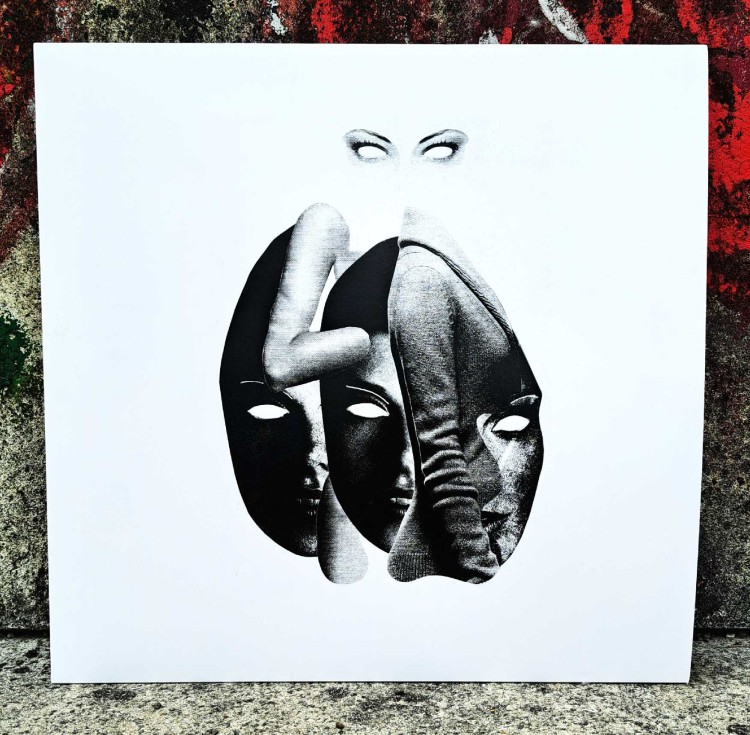
ACW 1012
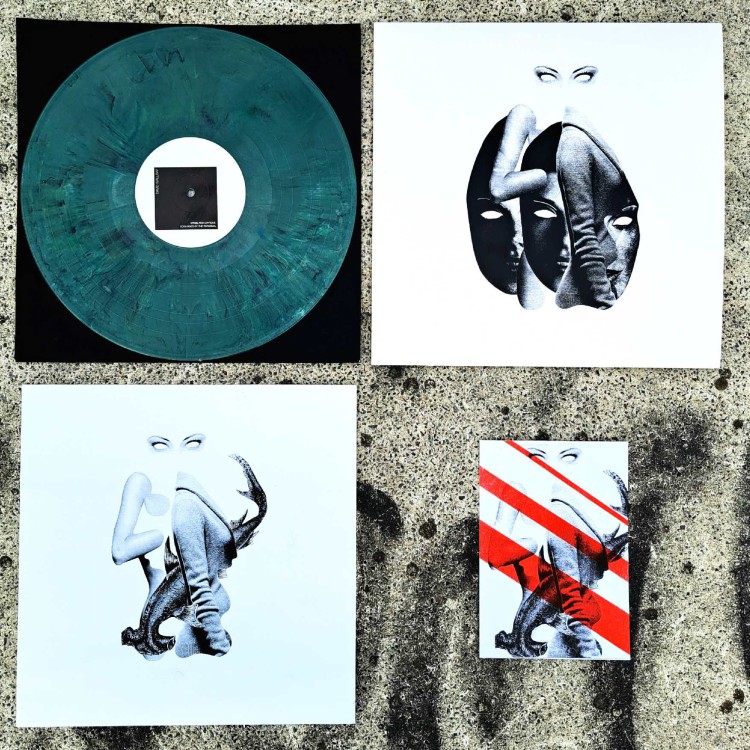
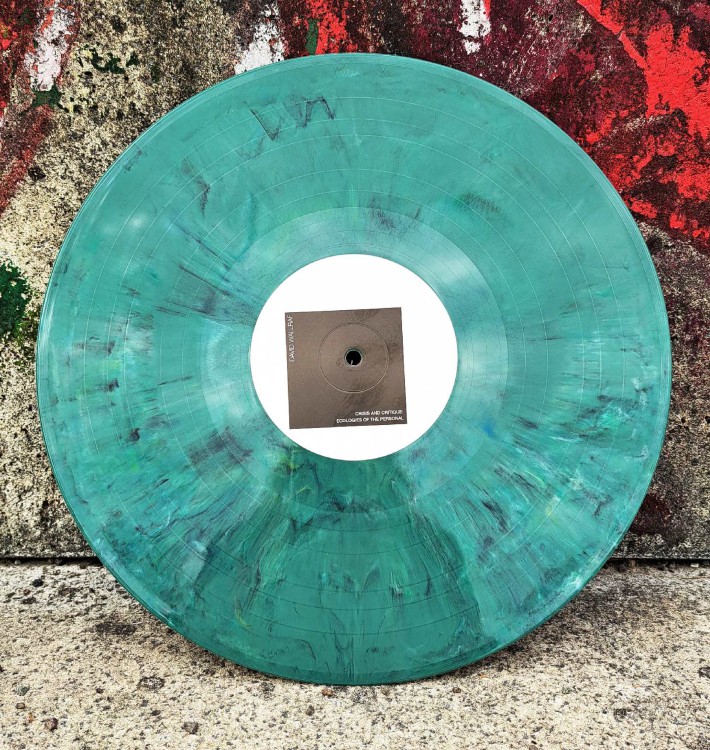
12" Vinyl Album
Released in 2026
limited to 200 copies
price: 20.00 EUR (excl. postage)
**you can order the vinyl version here:
€ 20 (no shipping to USA)**
attenuation-circuit@web.de
this is a joint-release with:
Econore Records econore.bandcamp.com/merch
RDS Rec rdsrechh.bandcamp.com
Grubenwehr Freiburg grubenwehrfreiburg.bandcamp.com
davidwallraf.bandcamp.com
davidwallraf.com
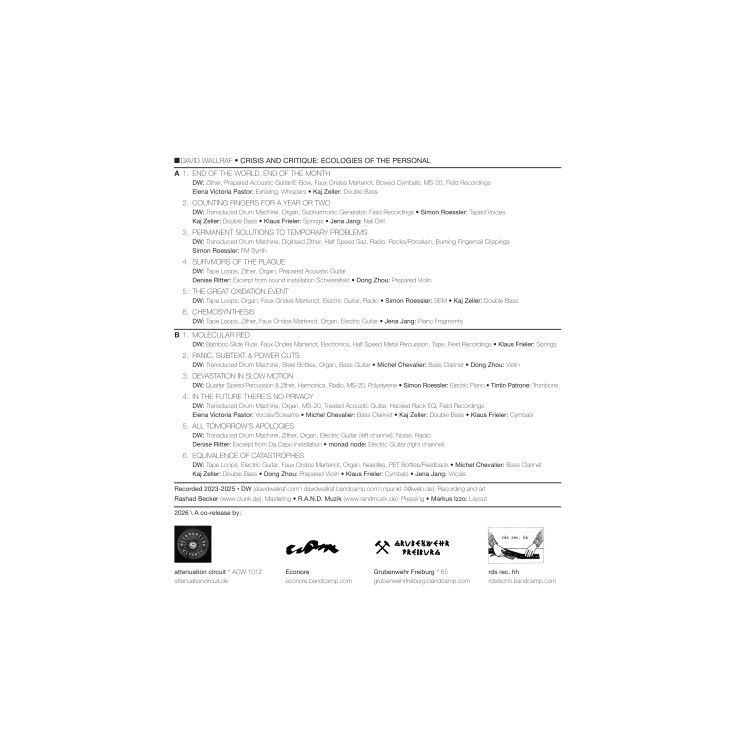
A 1. End Of The World, End Of The Month
DW: Zither, Prepared Acoustic Guitar/E-Bow, Faux Ondes Martenot, Bowed Cymbals, MS-20, Field Recordings
Elena Victoria Pastor: Exhaling, Whispers
Kaj Zeller: Double Bass
A 2. Counting Fingers For A Year Or Two
DW: Transduced Drum Machine, Organ, Subharmonic Generator, Field Recordings
Simon Roessler: Taped Voices
Kaj Zeller: Double Bass
Klaus Frieler: Springs
Jena Jang: Nail Drill
A 3. Permanent Solutions To Temporary Problems
DW: Transduced Drum Machine, Digitised Zither, Half Speed Saz, Radio, Rocks/Porcelain, Burning Fingernail Clippings
Simon Roessler: FM Synth
A 4. Survivors Of The Plague
DW: Tape Loops, Zither, Organ, Prepared Acoustic Guitar
Denise Ritter: Excerpt from sound installation Schwerefeld
Dong Zhou: Prepared Violin
A5. The Great Oxidation Event
DW: Tape Loops, Organ, Faux Ondes Martenot, Electric Guitar, Radio
Simon Roessler: SEM
Kaj Zeller: Double Bass
A 6. Chemosynthesis
DW: Tape Loops, Zither, Faux Ondes Martenot, Organ, Electric Guitar
Jena Jang: Piano Fragments
B 1. Molecular Red
DW: Bamboo Slide Flute, Faux Ondes Martenot, Electronics, Half Speed Metal Percussion, Tape, Field Recordings
Klaus Frieler: Springs
B 2. Panic, Subtext & Power Cuts
DW: Transduced Drum Machine, Steel Bottles, Organ, Bass Guitar
Michel Chevalier: Bass Clarinet
Dong Zhou: Violin
B 3. Devastation In Slow Motion
DW: Quarter Speed Percussion & Zither, Harmonica, Radio, MS-20, Polystyrene
Simon Roessler: Electric Piano
Tintin Patrone: Trombone
B 4. In The Future There’s No Privacy
DW: Transduced Drum Machine, Organ, MS-20, Treated Acoustic Guitar, Hacked Rack EQ, Field Recordings
Elena Victoria Pastor: Vocals/Screams
Michel Chevalier: Bass Clarinet
Kaj Zeller: Double Bass
Klaus Frieler: Cymbals
B 5. All Tomorrow’s Apologies
DW: Transduced Drum Machine, Zither, Organ, Electric Guitar (left channel), Noise, Radio
Denise Ritter: Excerpt from Da Capo installation
monad node: Electric Guitar (right channel)
B 6. Equivalence Of Catastrophes
DW: Tape Loops, Electric Guitar, Faux Ondes Martenot, Organ, Needles, PET Bottles/Feedback
Michel Chevalier: Bass Clarinet
Kaj Zeller: Double Bass
Dong Zhou: Prepared Violin
Klaus Frieler: Cymbals
Jena Jang: Vocals
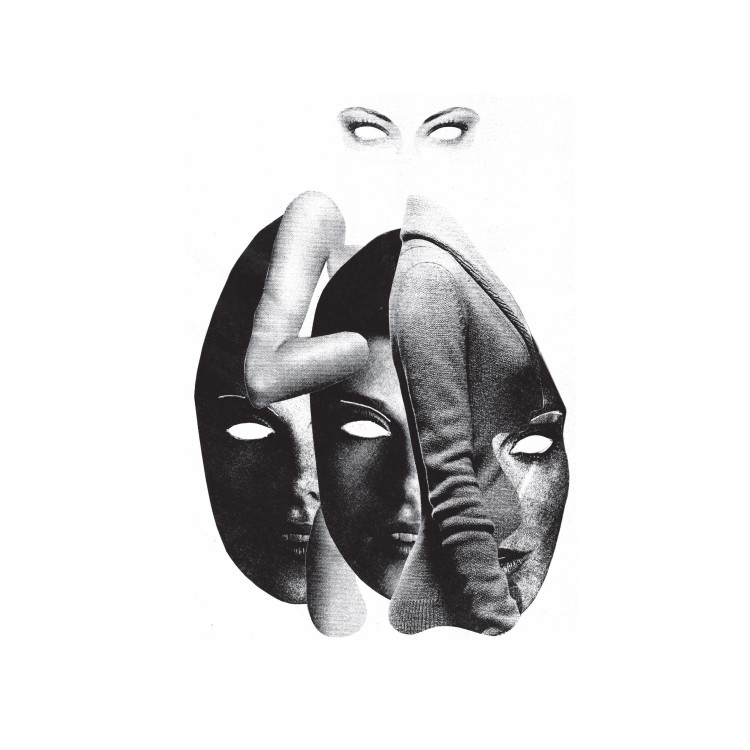
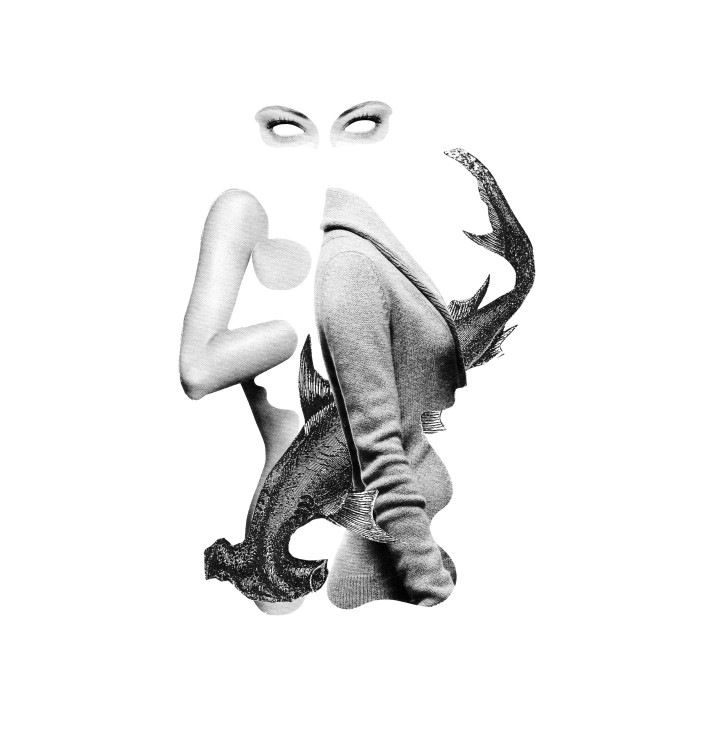
Recorded 2023-2025 by DW. Artwork by DW, layout by Markus Izzo.
Mastered by Rashad Becker. Pressing by R.A.N.D. Muzik.
Also available here: http://www.discogs.com/seller/dependenz?sort=price&sort_order=asc&q=attenuation+circuit&st
MusiqueMachine
David Wallraf is a prolific German soundscape artist, with dozens of releases on their Bandcamp dating back more than ten years. Crisis and Critique is a thirty-five-minute album of modern cinematic soundscapes on Mike Patton's Ipecac Records, with brooding melodic themes carried by guitar, horns and strings, and many percussive sounds created using stringed instruments, and a careful arrangement of dramatic gestures. There are eleven tracks, despite the short runtime, and most of the songs are short, each flowing seamlessly into the next. There is a long list of session musicians contributing everything from bass clarinet to zither, and instrumentation varies widely from track to track.
The music is soundtrack-like in a similar sense to Trent Reznor's "Ghosts" series, where one or two repetitive riffs with carefully selected tones and tasteful FX provide a space for subtle sound textures to emerge. Brooding, dark dub bass guitar might remind you of Bill Laswell's various contributions to Tzadik releases or Trevor Dunn's work in Fantômas. Indeed, this album has a resemblance to Fantômas' Delirium Cordia, in that it meanders through various dimensions of electronic ambience and instrumental playing, with only a chilling coldness and a sense of vague forboding to connect the different ideas.
Throughout the album is a surreal, arcane atmosphere, with a dusty, castle-like reverb, and haunted funereal melodies. The most abstract, such as "Chemosynthesis", wouldn't be out of place on Naked City's Absinthe, with its microtonal prepared violin percussion and desolate cathedral ambience. The characteristic 'twang' and pluck sounds in many of the melodic figures indicate that Wallraf shares his labelmates' love for Ennio Morricone.
These are compositions with tremendous depth that unfold quite efficiently. This is an expertly crafted album that should please those itching for new material from groups such as Fantômas. With its colourful wealth of instrumentation and gothic elegance, it is where the world of Ipecac intersects with gothic ambient, as one might hear from a label like Cyclic Law. An album worth playing again and again.
https://www.musiquemachine.com/reviews/david-wallraf-crisis-and-critique-1794223928645
SilenceAndSound
Après avoir puisé dans l’oeuvre de Pier Paolo Pasolini, David Wallraf emprunte à la philosophie des trois écologies (sociale, environnementale et individuelle) développée par l’illustre Félix Guattari, chacune modifiant le champ de l’autre à travers ses différentes actions.
Entouré d’une pléiade de musiciens, David Wallraf nous offre un espace où les éléments se désagrègent pour former des instants de décomposition éphémères, renaissant de leurs cendres pour donner naissances à des instants suspendus où l’étrangeté s’habille de lumières vacillantes, formant des ambiances maculées de mélancolie accrochées à des mélodies aux loops entêtants.
Crisis And Critique : An Ecology Of The Personal fait preuve de subtilité et de finesse, les texture travaillées avec minutie, offrant à chaque élément un relief surprenant de beauté et de poésie. Les titres flottent dans des zones fantomatiques, no man’s land de pays rayés de la carte à coups de typhons taillés dans des blocs de matières organiques, à la densité glaciale craquelée. Profond.
https://silenceandsound.me/2026/10/29/david-wallraf-2/
AFRICAN PAPER
David Wallraf ist ein in Hamburg lebender Künstler der (oftmals lärmenden) Klänge und setzt sich, so erfährt man auch von seinen Labels, immer wieder mit den unheimlichen und verdrängten Klangresten des alltäglichen Lebens in der westlichen Großstadt auseinander und schlägt dabei den Bogen zu politischen und ökologischen Krisen. Auch “Crisis And Critique: An Ecology Of The Personal” folgt diesem Ansatz und bezieht sich auf Félix Guattaris Konzept der drei miteinander verwobenen Ökologien: der Umwelt, des Sozialen und des Individuellen. Die Krise untersucht der Philosoph und Psychoanalytiker dabei als ein Prozess des Auseinanderfallens, durch den verborgene Details, Spannungen und Widersprüche sichtbar werden.
Für das Album begann Wallraf 2023, Skizzen an Musikerinnen und Musiker aus den Bereichen Noise, Sound Art, Jazz und improvisierter Musik zu schicken. Anders als bei vielen seiner zurückliegenden Arbeiten stehen hier mechanische und elektromechanische Klangerzeuger im Mittelpunkt: Drum Machines werden über Transducer mit verschiedenen Gegenständen verbunden, elektronische Instrumente über Gitarrenverstärker gespielt, Saiten- und Schlaginstrumente in unterschiedlichen akustischen Räumen aufgenommen. An den Aufnahmen beteiligen sich Elena Victoria Pastor (Stimme), Michel Chevalier (Bassklarinette), Tintin Patrone (Posaune), Kaj Zeller (Kontrabass), monad node (E-Gitarre), Jena Jang (Stimme, Samples, Klavier), Klaus Frieler (Mikroperkussion, Federn, Becken), Denise Ritter (Ausschnitte aus ihren Klanginstallationen), Simon Roessler (Keyboards, Synthesizer), Dong Zhou (präparierte Violine) und Wallraf selbst mit Zither, präparierter Akustik- und E-Gitarre sowie Orgel, Elektronik, Tape-Loops, Drum Machines und weiteren Klangquellen. Schon jetzt wird klar, dass es sich um ein groß angelegtes Werk handelt.
Die Musik ist ausgesprochen vielgestaltig und lässt sich kaum auf einen bestimmten Klangbereich festlegen. Lärmiges Rauschen trifft auf intrikate akustische Passagen von anrührender Atmosphäre, während sich darunter fast immer die Ahnung entwickelt, dass sich etwas Unabschätzbares zusammenbraut. Beängstigendes Flüstern steht vor brodelnden Klangkulissen, hektische Schritte hoher Absätze hallen durch weite Räume, repetitive Takte treffen auf fast liturgisch anmutende Melodien. Vieles bleibt dabei ineinander verschoben und nur undeutlich konturiert: Aquatisch wirkende Elektronik, die coil’sche Halluzinationen weckt, hallende Stimmen, metallene Geräusche, Saiteninstrumente mit folkig-mediterranen Anklängen und Sounds, die an Akkordeon oder Harmonium erinnern, überlagern sich zu schwer greifbaren akustischen Szenarien. Aus hörspielartigen Settings, die an Dub ebenso wie an die Akustik einer Tropfsteihöhle erinnern, kristallisieren sich immer wieder einzelne Instrumentalklänge heraus, nur um kurz darauf wieder von einer rauen Klangwand verschluckt zu werden.
Die Stücke entwickeln ihre Spannung meist schrittweise, ohne auf eine erwartbare Auflösung zuzusteuern. Schleppende, desolate Passagen können plötzlich von apokalyptischen Detonationen oder metallisch federnden Geräuschen durchbrochen werden, während wiederholte Strukturen eine fast körperliche Beharrlichkeit entwickeln. Besonders eindringlich sind die präzise gesetzten Geräusche von zerschellendem Glas oder die Momente, in denen sich akustische Ereignisse zu einer eigentümlichen Aufwärtsbewegung anschicken. Wenn Saitenspiel oder Anklänge an ältere populäre Musik auftauchen, öffnet sich die Musik für einen Moment in eine vergleichsweise heitere Richtung, doch die kratzenden, reibenden und schrill quietschenden Klänge sind meist nicht weit entfernt oder ohnehin schon zeitgleich da. Die einzelnen Stücke wirken dabei wie Ausschnitte aus größeren, nur teilweise sichtbaren Szenarien: Man bekommt extreme Stimmungen mit großer Genauigkeit zu hören, ohne je das vollständige Bild zu erhalten.
Besonders eindringlich gerät “In The Future There’s No Privacy”, dessen raue elektronische und perkussive Struktur von Elena Victoria Pastors Stimme und Schreien durchbrochen wird. Im abschließenden “Equivalence Of Catastrophes” kommen noch einmal Bassklarinette, Kontrabass, präparierte Violine, Becken und Stimme zusammen. Jena Jangs Gesangsperformance entwickelt dabei eine Intensität, die durch Mark und Bein geht.
Wallraf hat mit “Crisis And Critique: An Ecology Of The Personal” eine Musik geschaffen, in der das Auseinanderfallen nicht nur Thema, sondern unmittelbar hörbare Form ist: Klänge lösen sich aus ihren Zusammenhängen, reiben aneinander und bilden vorübergehend neue, ebenso fragile wie beunruhigende Konstellationen.
https://africanpaper.com/2026/10/24/david-wallraf-crisis-and-critique-an-ecology-of-the-personal/
MD-EKSPERIMENT
What does a collapsing world sound like? On Crisis And Critique: Ecologies Of The Personal, Hamburg-based experimental musician David Wallraf approaches that question through an unusual collection of instruments: modified drum machines, metal bottles, springs, porcelain, field recordings and fragments of sound installations.
The 12-track album is now available digitally and on limited-edition vinyl through Econore Records, RDS Rec, Grubenwehr Freiburg and Attenuation Circuit.
Inspired by French philosopher Félix Guattari's concept of three ecologies, the record explores the inseparable relationships between environmental conditions, social structures and individual experience. For Wallraf, a crisis cannot be understood within just one of these spheres: disturbances in one inevitably affect the others.
That idea extends to the album's construction.
Beginning in 2023, Wallraf sent musical sketches to collaborators working across noise, sound art, jazz and improvised music. Rather than relying primarily on the recycled tape loops and electronics of earlier recordings, they increasingly incorporated mechanical and electromechanical sources.
Drum machines were played through transducers attached to physical objects, while electronic instruments passed through guitar amplifiers. Acoustic instruments were recorded in different environments, allowing the materials and spaces themselves to influence the results.
The detailed recording credits reveal just how far this approach extends. “Permanent Solutions To Temporary Problems” incorporates rocks, porcelain and burning fingernail clippings alongside a slowed-down saz and digitised zither. “Panic, Subtext & Power Cuts” features metal bottles and bass clarinet, while “Devastation In Slow Motion” combines slowed percussion, harmonica, polystyrene and trombone.
These are not simply unusual objects added for novelty. They reflect Wallraf's interest in the neglected sounds of everyday life and the ways familiar materials can become strange when removed from their usual functions.
The project also brings together an extensive group of collaborators. Michel Chevalier contributes bass clarinet, Tintin Patrone plays trombone, and Dong Zhou adds violin. Kaj Zeller, Jena Jang, Klaus Frieler and Simon Roessler are among the other participants.
Sound artist Denise Ritter contributes excerpts from two installations, introducing another form of artistic material into Wallraf's compositions.
The album's title also carries a conceptual distinction. Wallraf connects crisis and critique through their shared Greek etymological roots, treating both as processes of separating something into its constituent parts. In this interpretation, breakdown can also expose the structures that previously remained hidden.
Recorded between 2023 and 2025 and mastered by Rashad Becker, Crisis And Critique: Ecologies Of The Personal offers a distinctly material approach to experimental composition.
Rather than illustrating ecological or political anxiety through conventional songwriting, Wallraf builds music from unstable relationships between objects, instruments, spaces and performers — letting the process of disassembly become part of the work itself.
https://md-eksperiment.org/en/post/20261015-david-wallraf-turns-everyday-objects-into-a-soundtrack-for-a-world-in-crisis
BAD ALCHEMY
DAVID WALLRAF kreist auf Crisis and Critique: Ecologies of the Personal (ACW 1012/Econore/ Grubenwehr Freiburg/rds rec. hh, LP) um 'Permanent Solutions To Temporary Problems', 'Survivors Of The Plague', 'Devastation In Slow Motion', 'All Tomorrow’s Apologies ... Um Krisen als der schlagenden Selbstkritik des Ungenügenden, der Teufelskreise, in denen wir loopen. Mit Zither, Faux Ondes Martenot, Gitarren, Percussion, weiteren ungewöhnlichen Klangerzeugern und dem Zuspiel von Kontrabass, Violine, Bassklarinette, Posaune etc. wird das als elektroakustisch klirrende, orgelnde, krachig dräuende Melange zur eindringlichen Mahnung vor dem, was wir uns einbrocken und einbrocken lassen. Wallraf könnte damit in Donaueschingen Aufsehen erregen, so wie er da das Ende der Welt, wie wir sie kennen, einläutet. Der non-binäre Hamburger dekonstruiert den Jetztzustand als Abbruchunternehmer, mit Guattari, mit Gusto am grandiosem Groll, an knurriger Melancholie, dem Beat des Protests, aufschreiendem Zorn.
www.badalchemy.de
 brezenstudio engine